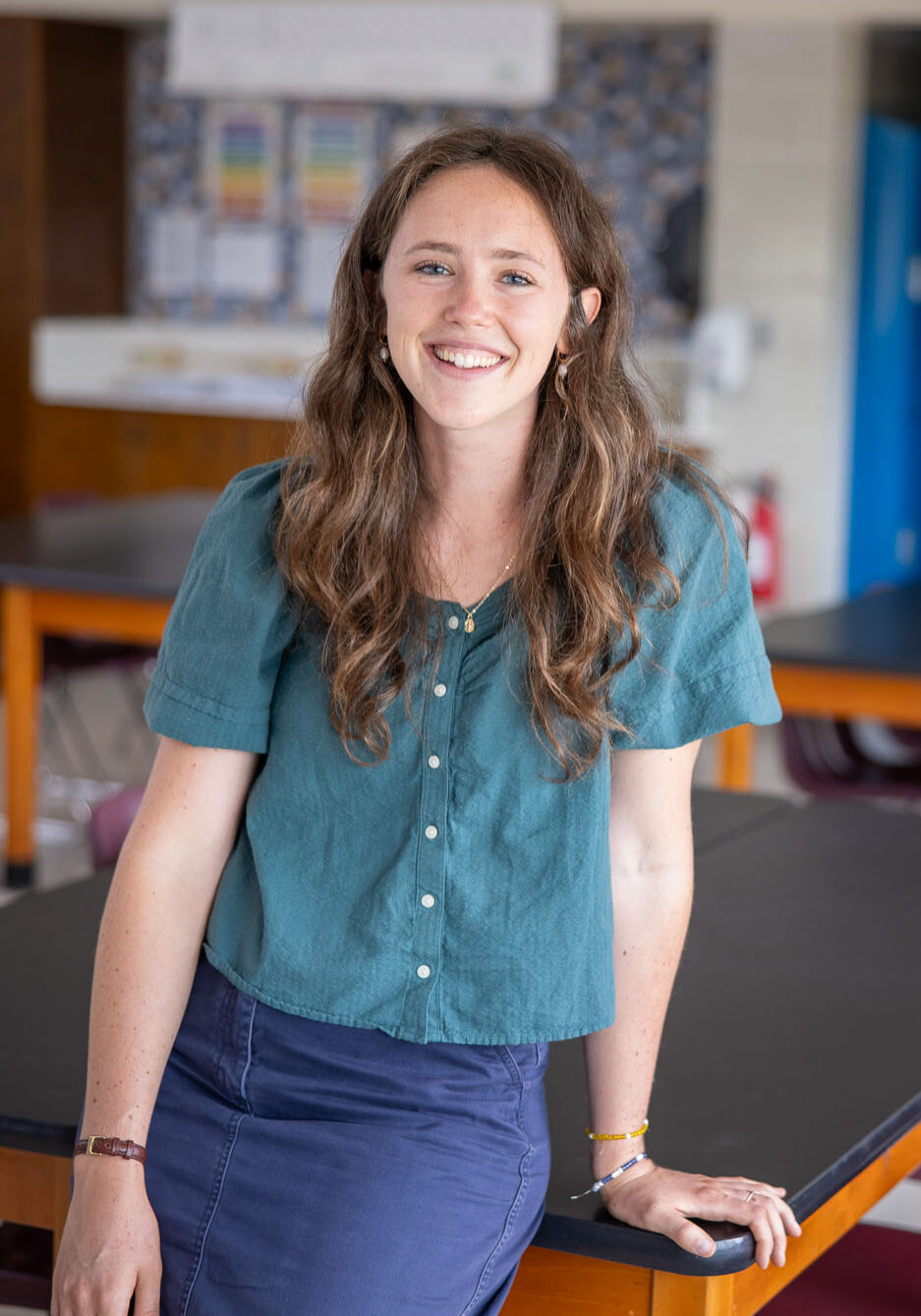
Each morning as Mary Carlson turns the key to unlock her classroom door, she believes she is presented with an “Annunciation moment” — she is invited to be part of small moments that could change the world. The day ahead is ripe with little opportunities for the Word to be spoken, for light to shine in the darkness, and for reality to be revealed more deeply. Carlson’s response is as quick as the key in the lock: Let it be done.
Carlson credits her teaching vocation to the Lord and His plan for her life. But it wasn’t always that easy.
“In college, I thought I was going to be a great doctor: a life poured out, always necessary, and serving a whole range of people,” she recalls. “But as I came to know the Lord, the question kept coming up: ‘If it’s true that God has a plan for my life, is it possible that it’s different from mine?’”
The question terrified Carlson, and she avoided it until she studied abroad in Rome. Removed from the duties of pre-med life, it became clear to Carlson that God had a plan for this world, and she had a part in it. At the end of that semester, she offered her plan to the Lord but still was not expecting much change. The summer before anticipated medical school, Carlson said yes to a summer of missionary work in Alaska, where she traveled to different parishes to implement a faith camp for children. After using a coffee filter to explain the Holy Trinity one afternoon, Carlson realized that something was different. She experienced a life-giving joy unlike anything she’d experienced before. Trusting the movement of the Holy Spirit, Carlson accepted a role in the Pacific Alliance for Catholic Education (PACE) program to teach for two years in Salt Lake City, Utah. There, she delighted in teaching both religion and science: two classes that were essential for her own deeper conversion.
“I was the kid who hopped from an anatomy lab to a philosophy class and was left wrestling about the compatibility of these truths, ultimately coming to understand that with God’s Truth, these things cannot be separate,” she says.
After PACE, Carlson moved to West St. Paul and has taught middle school science at Saint Joseph Catholic School since 2022.
Trust and support
During Carlson’s first year of teaching, she had to further trust that God’s plan of goodness for her life extended to all parts, even lesson planning. She says that trying to learn all new content and curriculum can feel overwhelming. But thankfully, Carlson had a supportive mentor teacher who helped her develop her own authentic teaching style.
“She told me not fall into the weeds of trying to master every educational buzz word, but instead to really focus on my objective for each lesson: What content do my students need and what connections should we build together?”
Carlson quickly felt the redeeming aspects of being an educator, finding immense joy and peace with her students.
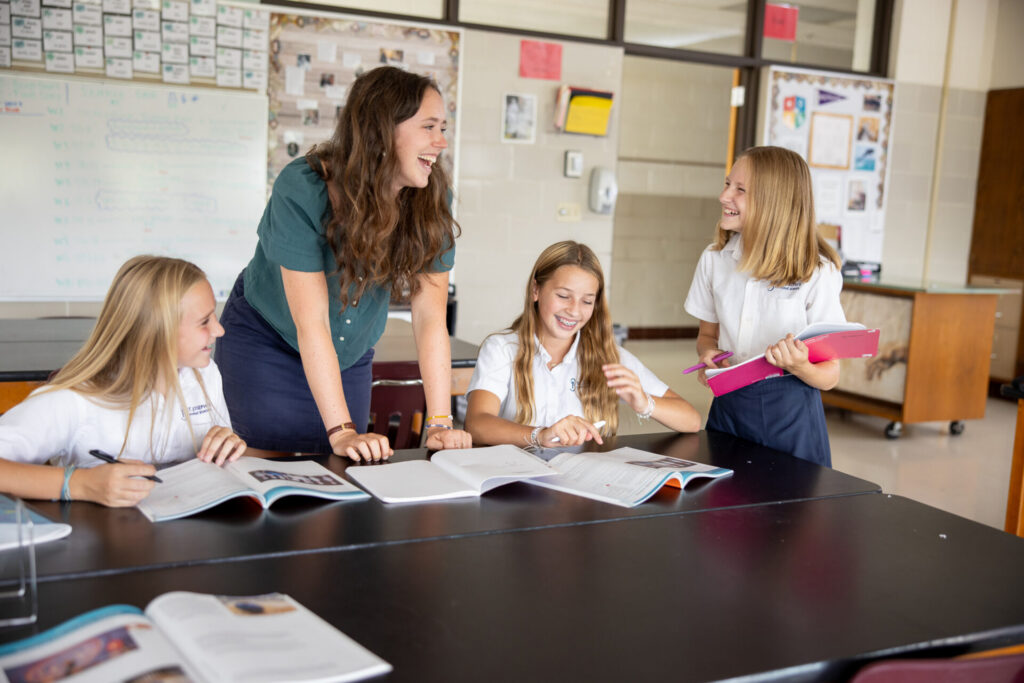
“Middle schoolers are some of the best people,” Carlson says. “They have so much wonder and awe about the world and a deep desire to know and understand it all. I know middle school is such an important time for their formation, and it challenges me daily to continue my own path to holiness. And to top it off, they are really goofy. I’ve never laughed more in my life, and that only increases each year.”
Growing in the classroom and beyond
One of Carlson’s favorite parts of teaching middle school is being with the students as they develop abstract reasoning for the first time, always working to build connections within areas they’ve never questioned before and experiencing so many ‘aha’ moments. She finds it a privileged place to be the person who not only receives their questions, but also helps them learn how to think critically.
For those considering a career in teaching, Carlson encourages them to get into a Catholic school classroom.
“You won’t know if it is for you unless you try! If there is a desire to be with kids, to be in the position of receiving the most important (or the silliest) questions on earth, and you’re excited about that, then say yes!” She adds, “It will be tough and challenging, certainly, but as Pope Benedict XVI said, “We were not called for comfort, we were called for greatness.”