
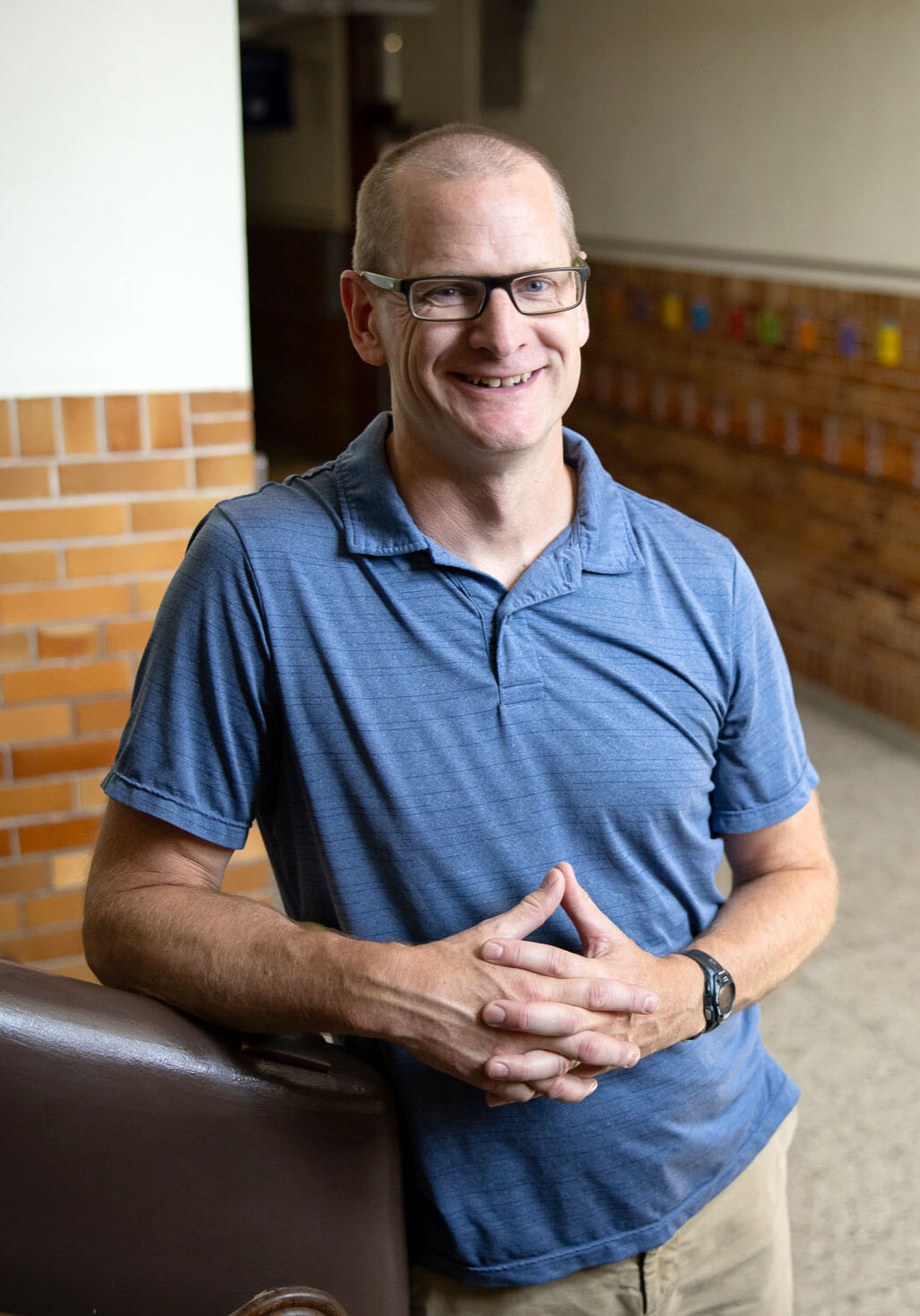
Over his 15 years of teaching in the Archdiocese of Saint Paul and Minneapolis, David Heintz has taught a wide range of grades and subjects — fifth grade and sixth grade, middle school religion, math and language arts, even kindergarten for six years.
“Now, I’m full-time science and engineering, and it’s a nice fit,” says Heintz, now at Saint Agnes School in St. Paul.
Heintz ‘s path to teaching was inspired by his own teachers.
“I always had teachers that stood out in my life as people I admired and looked up to,” he recalls. “In high school, my math and science teacher, Jim Micna, was the first one who said, ‘You should really consider this.’ I still remember sitting in his calculus class my senior year, just admiring the work that he did and the energy and passion that he put into it. One day it just clicked for me. I remember thinking, ‘That’s good work. That’s important work. He’s enjoying it. I want to do that.’”
To explore if teaching was right for him, Heintz started choosing summer jobs that would give him a taste of what teaching would be like.
“I worked at a summer camp — the best thing ever — and taught swimming lessons,” he recalls. “It opened my eyes to what working with young people is actually like. I think some new teachers forget what they were like as a child and come into the profession with this false idea that your classroom is full of compliant little children who are super interested in you and everything you’re teaching them. I never had that misconception because of my summer jobs. I had recent first-hand experience of how human even little humans can be.”
As a geology major, Heintz ‘s enthusiasm for science is palpable — he loves anything related to earth science.
“I also get very passionate about making connections between faith and science, particularly in the classroom,” he explains.
His dedication to integrating faith with education is a hallmark of his teaching philosophy.
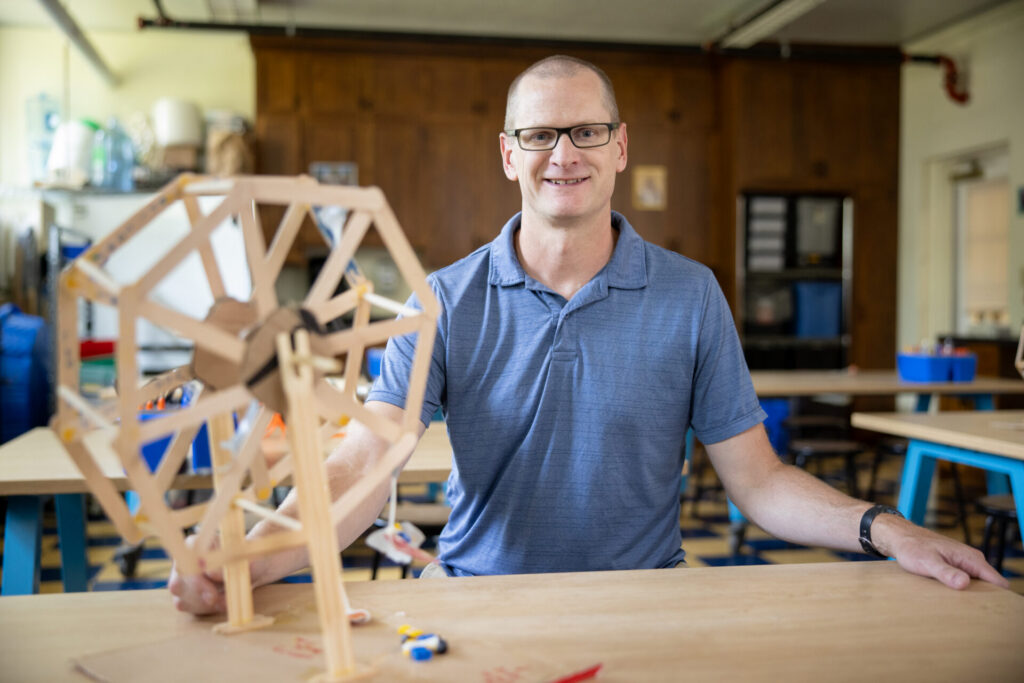
“My experience as a religion teacher allows me to make deeper connections between faith and science and help the kids see that the two are not in conflict.”
Seek first the Kingdom of God
To remain grounded and avoid burnout, Heintz prioritizes God and his family in his time outside of school.
“Teaching is hard because it’s a vocation, but it’s also a job,” he says. “It’s very easy as a teacher to get overwhelmed by all the directions you’re pulled in: the paperwork, the grading, the lesson planning and the unique needs of the dozens upon dozens of students you interact with. There’s always a danger of letting yourself be smothered and letting your fire peter out.
“So, to keep that passion, I need to balance my life, putting God and family first,” he explains. “I really try not to bring work home with me. When I’m out of this building, it’s time for my family, it’s time for my relationship with the Lord. My primary vocation is holiness, followed by my call to be a husband and father. If I put those vocations first, my teaching vocation takes care of itself. ‘Seek first the Kingdom of God.’ That’s the idea.”
When asked what makes a good teacher, Heintz emphasizes the importance of humility, joy and charity. Virtues are central to his teaching philosophy and essential for educators, he believes.
“We have to first and foremost be humble. I strive to be joyful in my work and maintain a spirit of charity, wanting what’s best for the kids,” he says.
His journey, marked by a deep love for science, a commitment to faith and a passion for educating young minds, underscores the profound impact that dedicated teachers can have on their students. For those considering a career in teaching, Heintz offers this advice: “Go for it. Your future students need you. The work is challenging but incredibly rewarding.”